iluminr FRONTIER AI RISK
Menu
ResearchRegulatory signalsSimulationsCommunity
Subscribe
Agent Down: AI agent with warning signal
INDUSTRY REPORT · OCTOBER 2026

The State of Resilience in Agentic AI Adoption

AI changes the operating model. Resilience assumptions need to change with it.

What resilience leaders revealed about critical AI dependencies, recovery decisions, and operational resilience.

3 CLEAR INSIGHTS

The findings are eye opening.

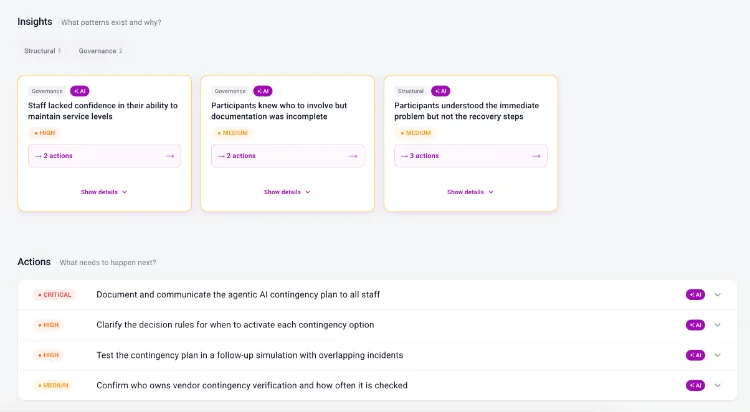
1Confidence in maintaining minimum service levels in a critical service, is low.Only 16% of resilience professionals could demonstrate confidence in maintaining minimum service levels in critical service delivery after the loss of an agentic AI vendor.
2People strategies are the contingency strategy of choice after AI fails.In attempt to recover critical services, people largely turned to people, as the most reliable option of contingency. This elevates the criticality of workforce considerations in resilience alongside AI deployment.
3Design for resilience, not recovery.Maintaining a resilient delivery of critical services to customers, came down to decisions made at time of AI deployment, not at the time of the incident.
2 VIDEO UPDATES · 7 DECISION POINTS

Where your peers agreed, and where they split.

DECISIONS 1 TO 2 · STAKEHOLDERS

“Who else would you engage for the response? Are these stakeholders formally documented?”

16%named HR, in a scenario defined by a 70% workforce cut. Only 1 named sanctions screening.
DECISION 3 · IMPACTS

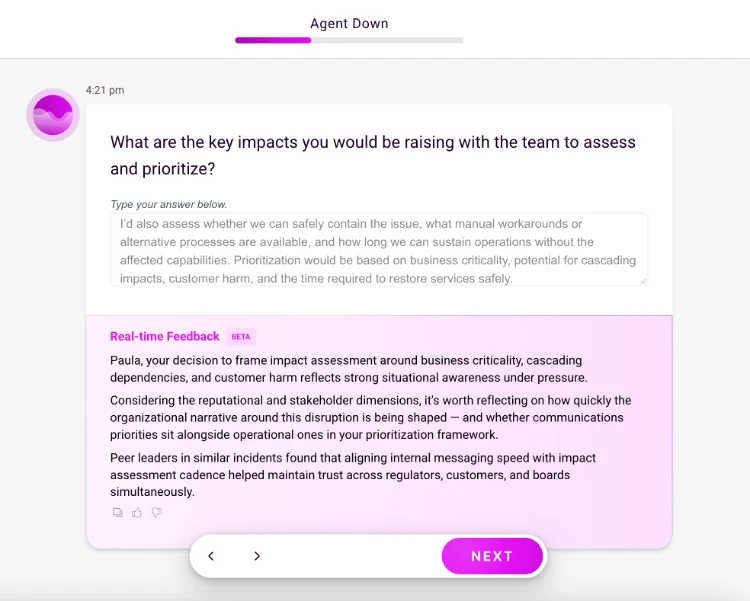
“What are the key impacts you would be raising with the team to assess and prioritize?”

58%raised customer impacts first. Only 6% raised impact tolerances.
DECISION 4 · IMPACT THRESHOLDS

“With the agent running at 300% throughput, will we breach impact thresholds faster?”

77%anticipated breaching impact tolerances sooner after losing the agent.
DECISION 5 · RECOVERY STRATEGY

“Three key response strategies are emerging for consideration. Which of these would you suggest receives the highest priority?”

Alternate strategy
32%
BPO
29%
Alternate AI
26%
Rehire
13%
No single strategy emerged. 39% of participants selected workforce solutions to recover.
DECISION 6 · CONFIDENCE

“How confident are you that minimum service levels can be maintained within impact thresholds?”

16%were confident of maintaining minimum service levels. None were very confident.
DECISION 7 · PRIORITY ACTION

“What is the one action that you believe should be prioritized to increase confidence in maintaining minimum service levels for this scenario?”

Process
26%
People
23%
Vendor
23%
Governance
19%
Communication
10%
No single action dominated. Every response is listed in the report appendix.
Cohort ReadinessPreparedness to act for real
Moderate
Solid readiness, with a few soft spots.
Participant ConfidenceHow sure people were
Moderate
Generally confident, with some doubt.
Alignment LevelAgreement on key decisions
Moderate
Good alignment on the core decisions.
Critical Blind SpotsMissing essential steps
Elevated
Several essential steps were missed.
WHAT’S INSIDE

The full readout, decision by decision.
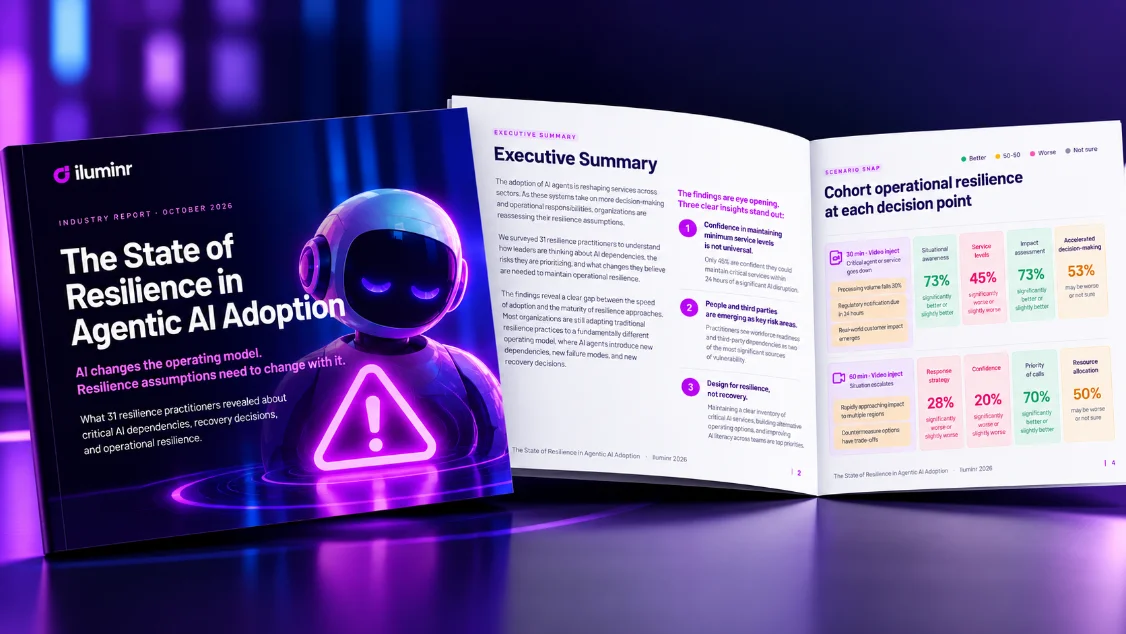
✓Every decision point, cohort split and the reasoning behind it ✓Findings mapped to APRA, FCA, OSFI and MAS expectations ✓Capability Intelligence insights and prioritized actions ✓5 priorities for organizations adopting agentic AI ✓All participant responses, grouped by theme
“

The time to have an alternate solution was long before the crisis. The idea that you could contract with another firm quickly enough is wrong.

Agent Down participant Practitioners from organizations across 6 countries, each answering in a personal capacity.
INSIDE AGENT DOWN

The same scenario, run with your own teams.

Run the scenario
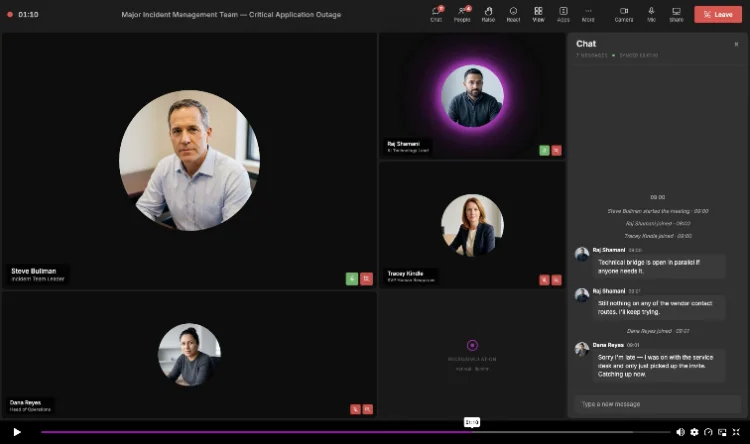
1The video update
Each participant hears the same briefing and decides alone.
2The decision
Every decision point records the choice, the rationale and how confident the participant felt.
3The insight
See where your teams converge, where they split, and what to strengthen next.

View the full report.

{{ formIntro }}

{{ error }}